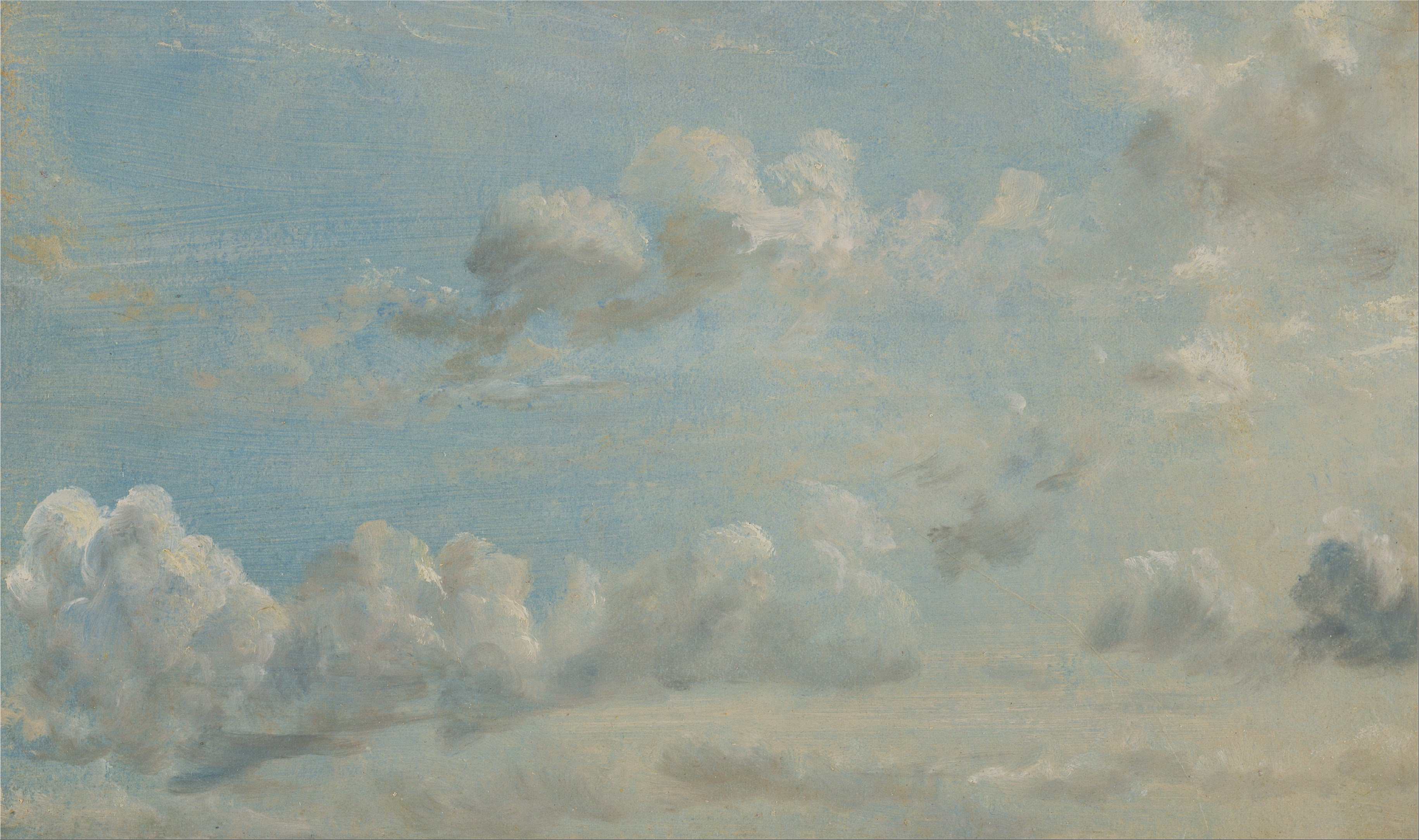
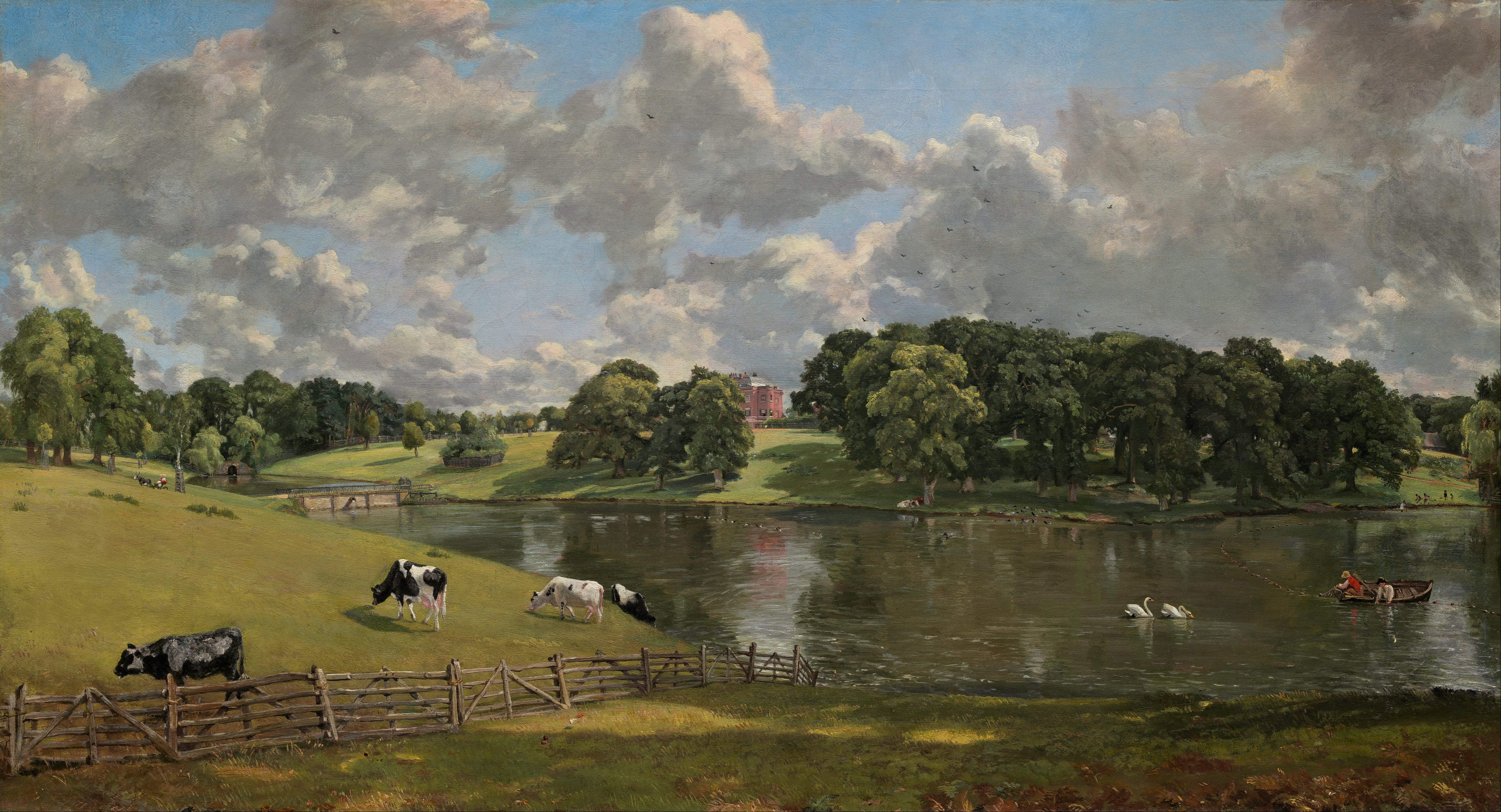
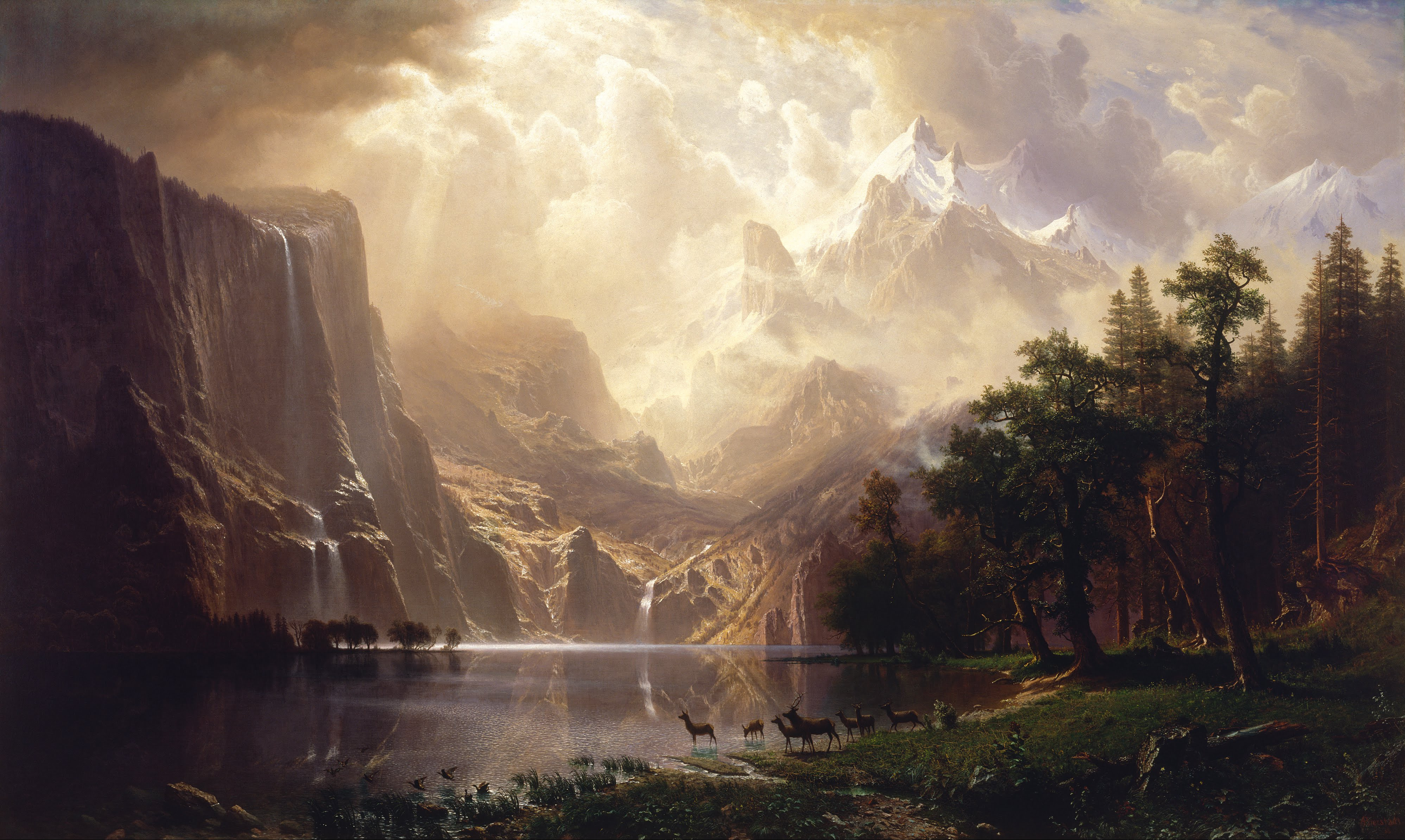
The 19th-century Hudson River School painters — Thomas Cole, Frederic Church, Albert Bierstadt — painted American wilderness with the deep conviction that God's glory was written in every mountain range and river valley. This unit approaches landscape painting through that same lens: creation as revelation, beauty as a form of praise. We work in watercolor and acrylic across three projects of increasing scale and ambition.
Unit Goals
Master wet-on-wet watercolor for painting skies. Experience direct observation through en plein air sketching outdoors. Complete one substantial acrylic landscape suitable for framing.
Projects
Watercolor Sky Studies
Watercolor · 5×7" watercolor paper
Week 20
The sky is the most dynamic and glorious subject in landscape painting. You'll paint three small sky studies in one sitting: a sunrise, a dramatic storm sky, and a sunset. Each uses the wet-on-wet technique — painting wet color into a wet wash — which produces the soft, luminous blending that defines great watercolor skies. Pre-mix all your color puddles before wetting any paper.
'En plein air' — French for 'in the open air' — means painting directly from nature, outside, on location. Every great landscape painter worked this way, including the Hudson River School masters. No photographs allowed for this project. Sit outside for at least one hour and draw or paint what is directly in front of you. Any outdoor location works.
Your most ambitious painting so far — a larger acrylic landscape on canvas board depicting a place in creation that feels significant or sacred to you: a forest, a coastline, a field, a river, a mountain. You may work from your plein air sketch, a photograph, or from imagination. The guiding question: what place in creation makes you most aware of something larger than yourself?